Smoky Mountain Corridor: Scale, Consistency and Experience-Led Demand
A look at one of the most established RV park and campground markets in the U.S.
Few markets combine scale and consistency quite like the Smoky Mountain Corridor. Anchored by the gateway communities of Sevierville, Pigeon Forge, and Gatlinburg (collectively the Sevier County market), it has become one of the most established RV and campground markets in the U.S., with approximately 216 parks and nearly 14,000 sites, and another three parks in the pipeline through 2027.

Reliable Demand Anchored by Regional Tourism
What drives this market is not just volume, but reliability. The Great Smoky Mountains National Park remains the most visited in the U.S., drawing more than 11 million visitors annually. Although summer and fall represent peak demand, shoulder seasons remain active because the region is located within a one-day drive of roughly 60% of the U.S. population, a factor that helps maintain a steady floor for occupancy.
Pricing Reflects a Balanced Market
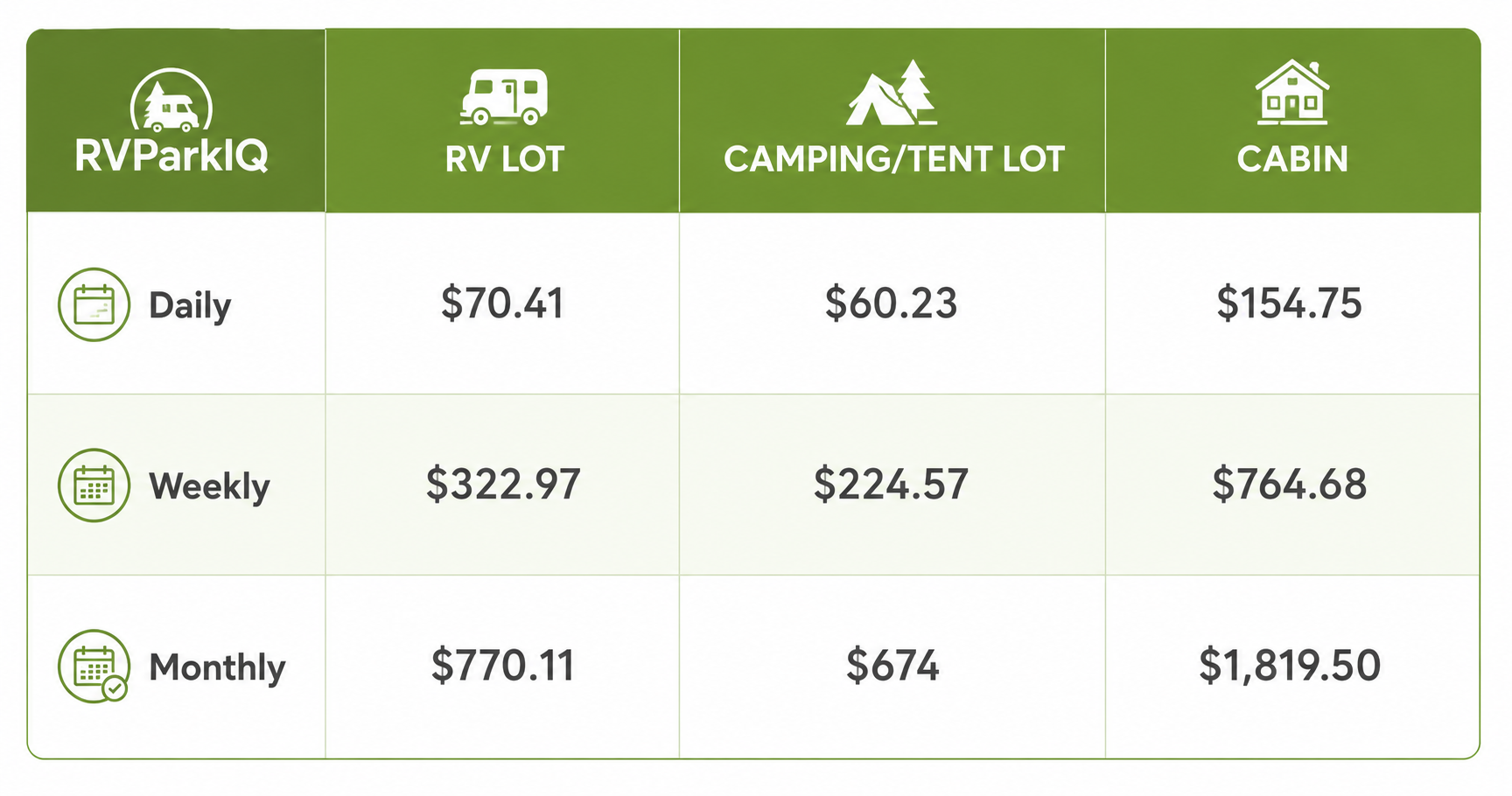
Despite its density, pricing suggests the market remains well balanced. Average nightly RV rates hold around $70, a premium to the national average, supported by a mix of short-term visitors and repeat seasonal demand. The spread across RV sites, tent camping, and cabins also reflects a layered demand base, with different user segments paying for varying levels of experience.
Supply Mix Continues to Evolve
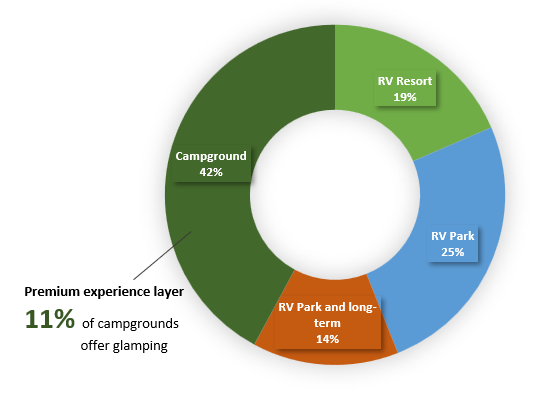
The supply mix reinforces this dynamic. Traditional campgrounds still make up the largest share, but a growing portion of inventory is shifting toward higher-quality formats, including RV resorts and hybrid models that accommodate both transient and longer-term stays. At the same time, the market retains smaller, boutique-style campgrounds that leverage the region’s terrain and offer a more differentiated experience.
Glamping and Experience-Driven Product
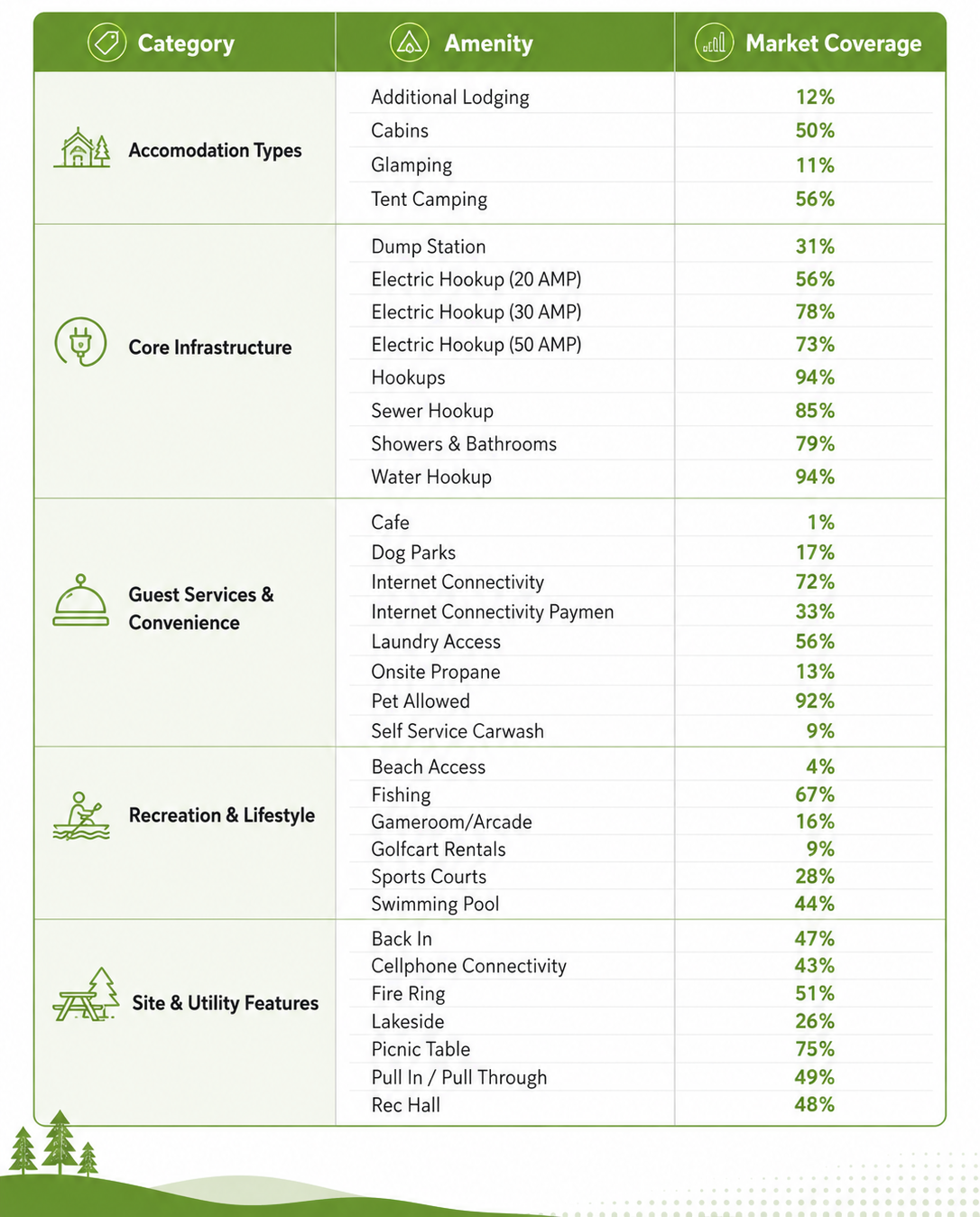
Amenities point to where the market is heading. About 11% of parks now offer glamping, still a relatively small share of total supply, but increasingly where investment is being directed as operators focus on higher-end, experience-driven product.
A Demand-Driven, Experience-Led Market
Compared to markets like Florida and Texas, which continue to see large-scale 200+ site developments, the Smoky Mountain Corridor competes differently. Here, performance is shaped less by expansion and more by demand intensity, supported by consistent visitation, limited new supply, and a diverse product mix that helps sustain pricing even at scale. With only a handful of new parks expected, supply growth remains constrained by terrain, zoning, and market maturity, shifting the focus toward how assets are positioned – through amenities, upgrades, and product differentiation – rather than simply adding more sites, reinforcing the Corridor’s role as a demand-drive, experience-led market.
Explore Markets with RVParkIQ Explorer
RVParkIQ Explorer gives investors, developers, brokers, and operators access to market-level data for RV parks, campgrounds, and glamping opportunities. Use Explorer to evaluate supply, pricing, demand drivers, development activity, and competitive positioning in markets like the Smoky Mountain Corridor.